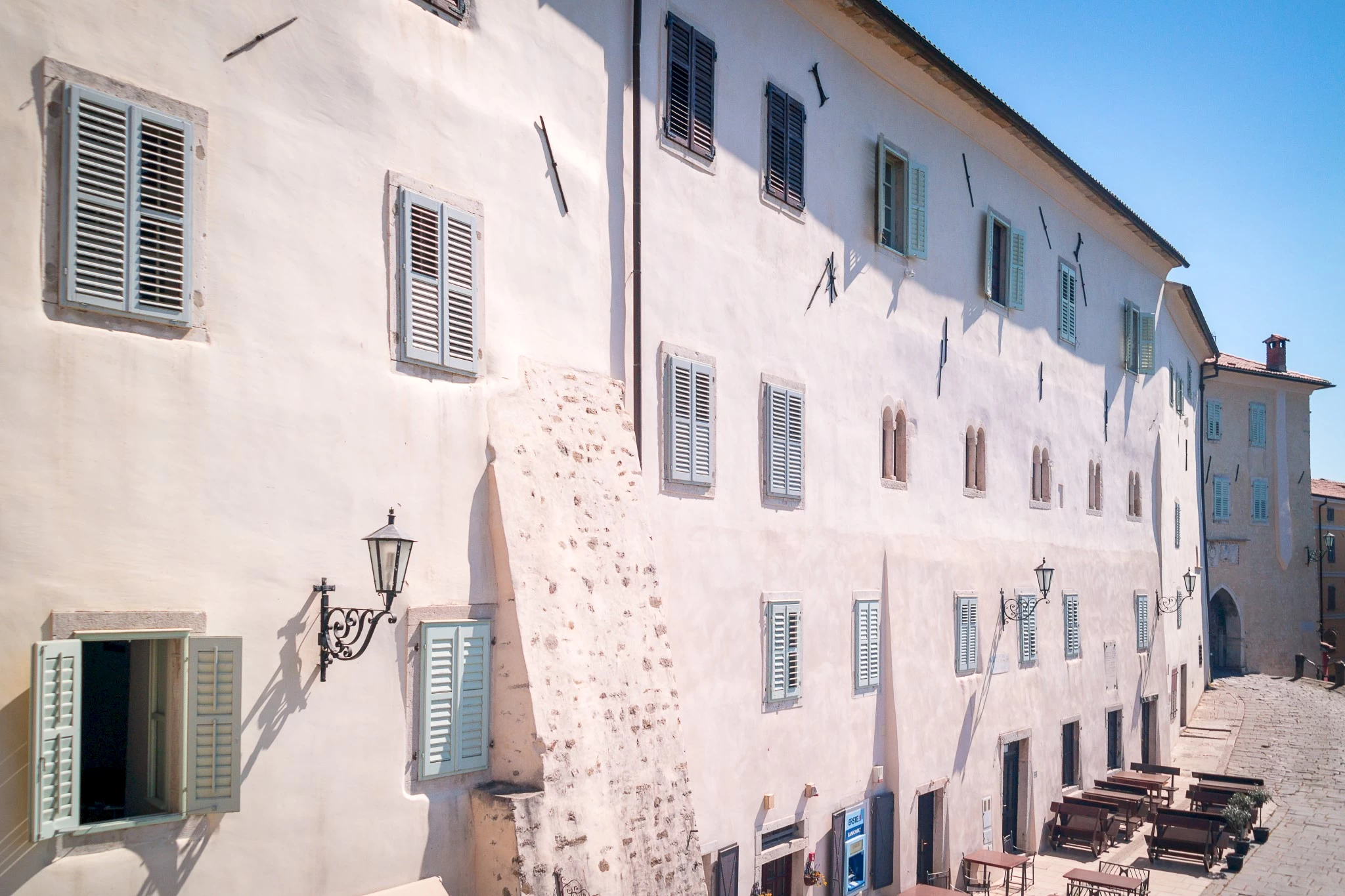
Historic Building
Municipal palace
75%
The Municipal Palace in Motovun is the best-preserved Romanesque public building in Istria and Croatia, dating back to 1248 and serving both as a town hall and a defensive structure.
UrbanRuralEducational

Andrea Antico Square is the main square of Motovun, named after the famous 15th-century music publisher and composer born in the town. It features historic well shafts, including one with the oldest Venetian lion in Motovun, and serves as the primary venue for public events.
Andrea Antico Square- The famous person after whom the upper square is named, which is also the main square of Motovun, is Andrea Antico or Andrija Motovunjanin, a famous music publisher, music printer and composer, who was born in Motovun around 1480. Below the main square there is a large cistern, and on each side of the square are well shafts - one from the 15th century and one from the 14th century, on which is the oldest Venetian lion in Motovun from 1332. The main square is also the most beautiful stage of all public events in Motovun.
The Municipal Palace in Motovun is the best-preserved Romanesque public building in Istria and Croatia, dating back to 1248 and serving both as a town hall and a defensive structure.
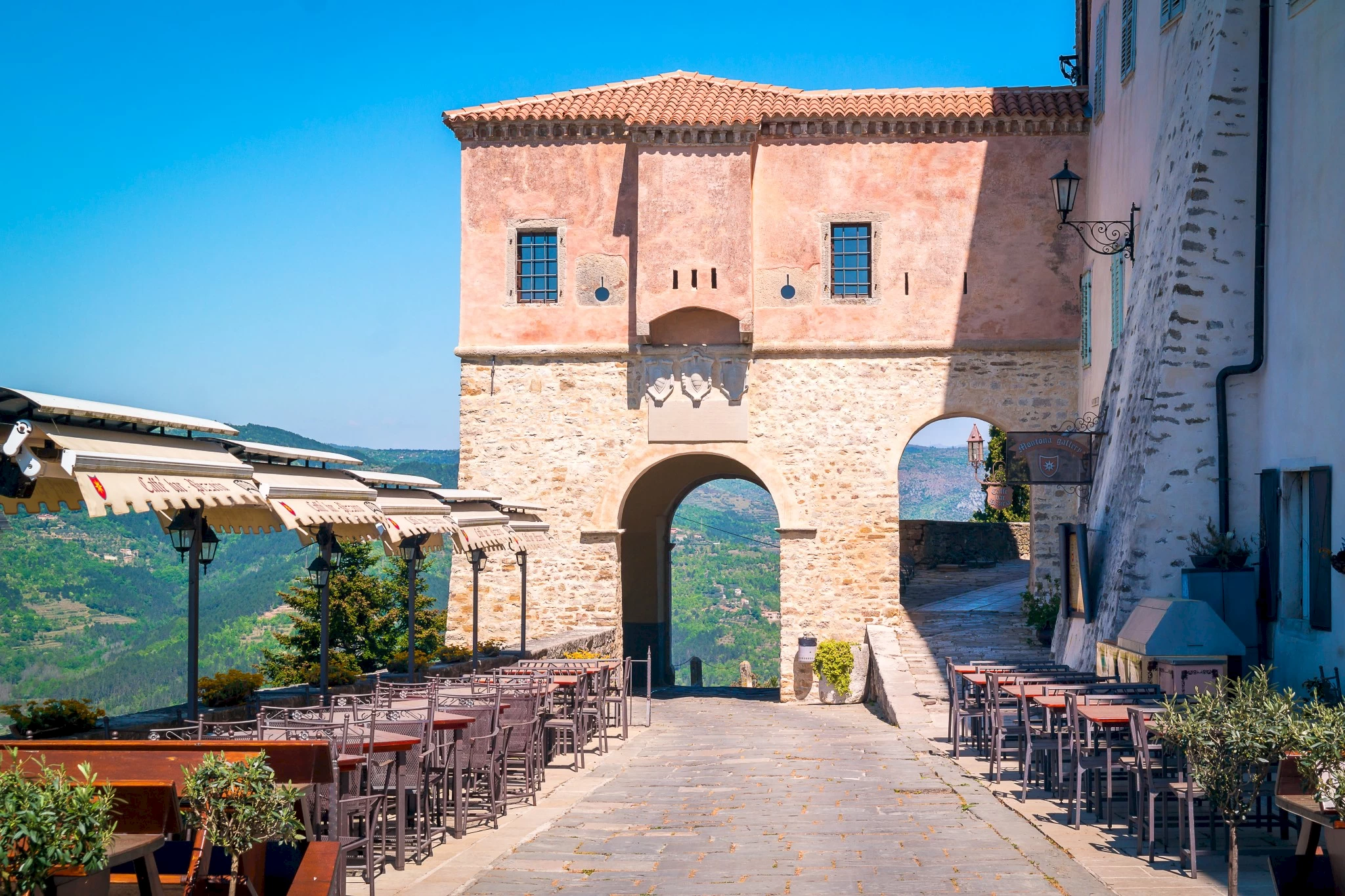
The Tower „New Gate” in Motovun is a 17th-century fortification featuring historical defensive architecture and a lapidary collection of Roman tombstones and coats of arms.
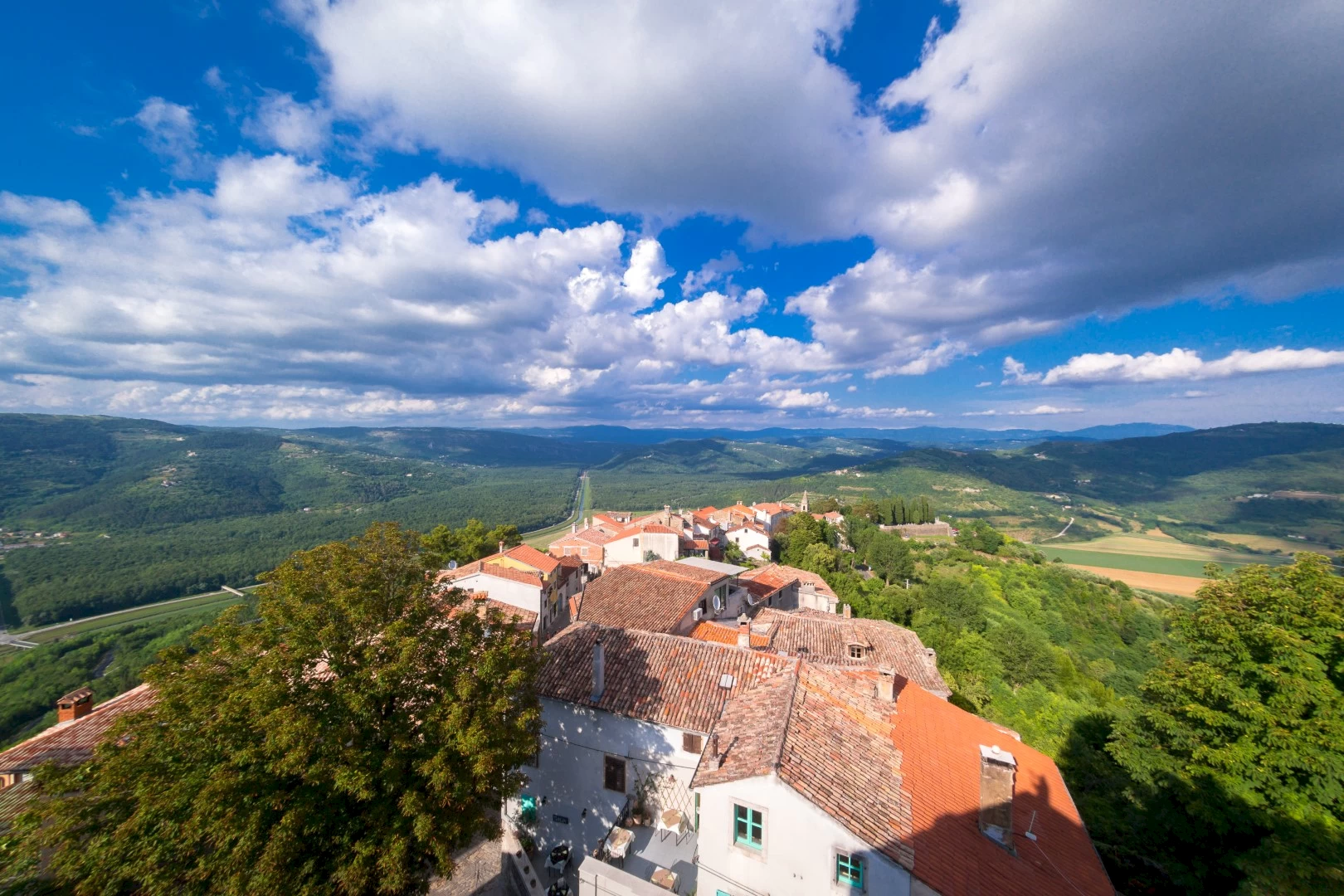
Gradiziol is a historic suburb of Motovun that developed during the 14th and 15th centuries, featuring the church of St. Margaret and 18th-century architecture.
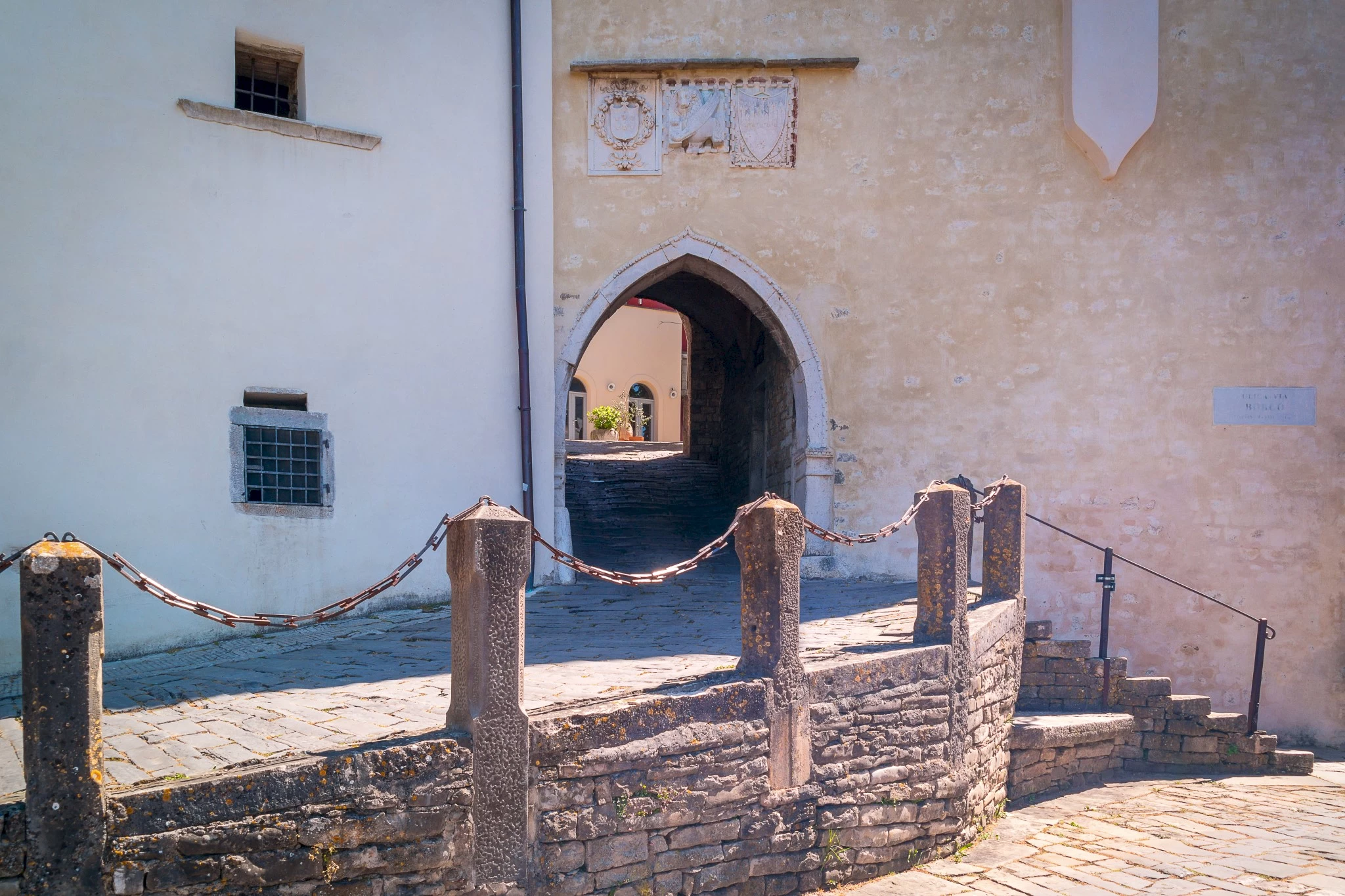
The Main City Gate in Motovun is a 14th-century structure featuring Gothic and Romanesque elements that served as the primary defensive entrance to the city.
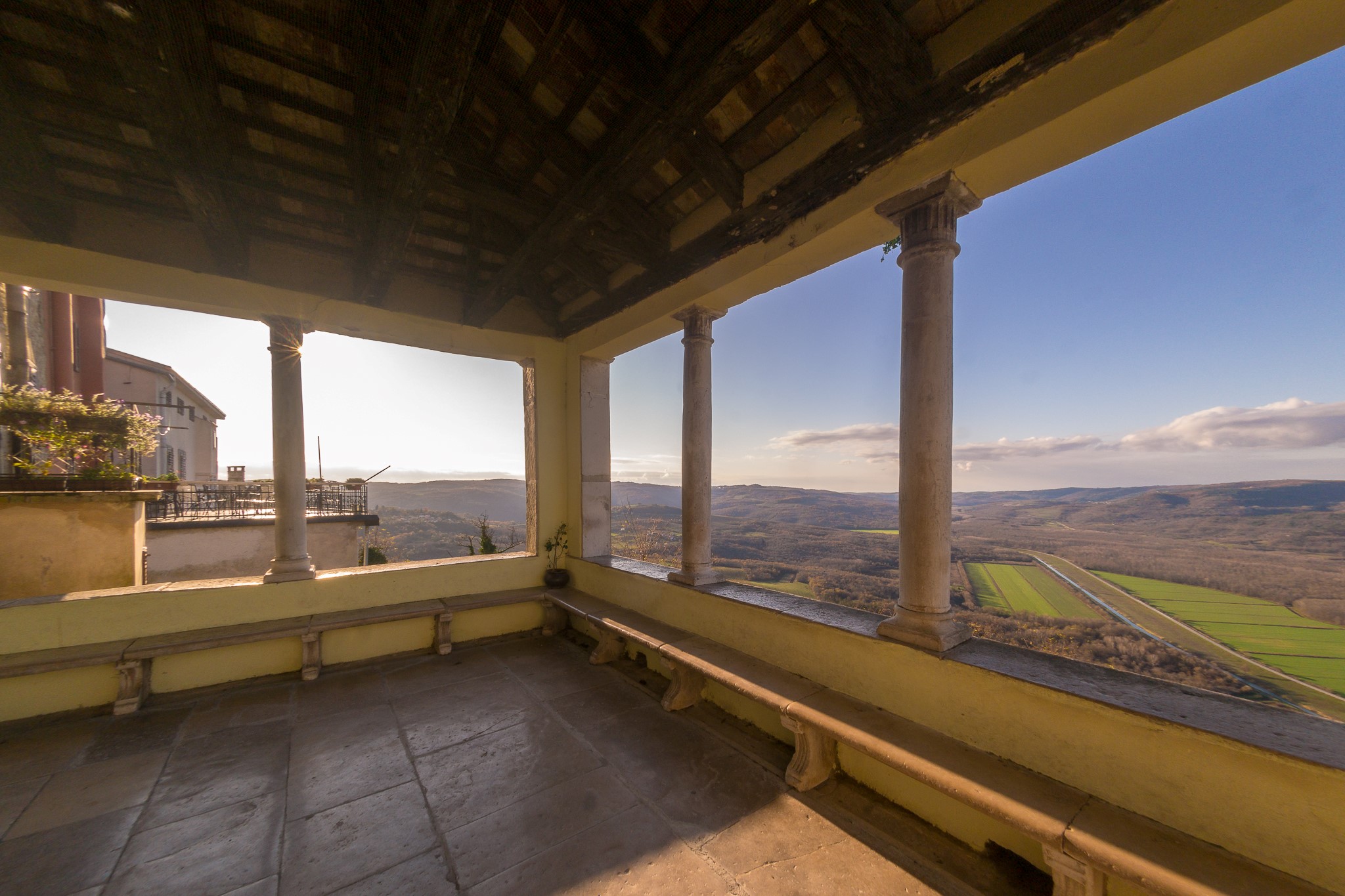
The 17th-century Motovun Loggia is a historic town square landmark that once served as a center for legal and civic life and is now a popular viewpoint overlooking the Mirna river valley.
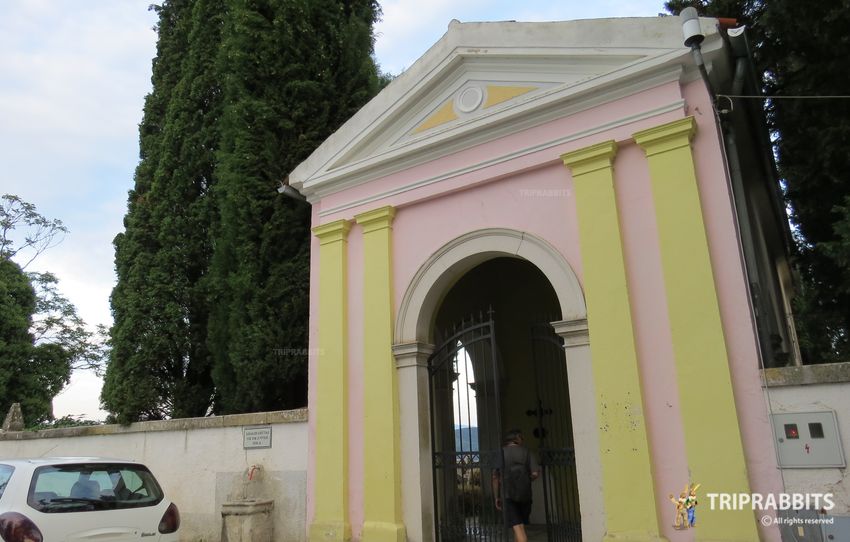
The Church of St. Margaret is a 19th-century church located at the historic upper cemetery in Motovun, which was formed by merging three older cemeteries in 1818.