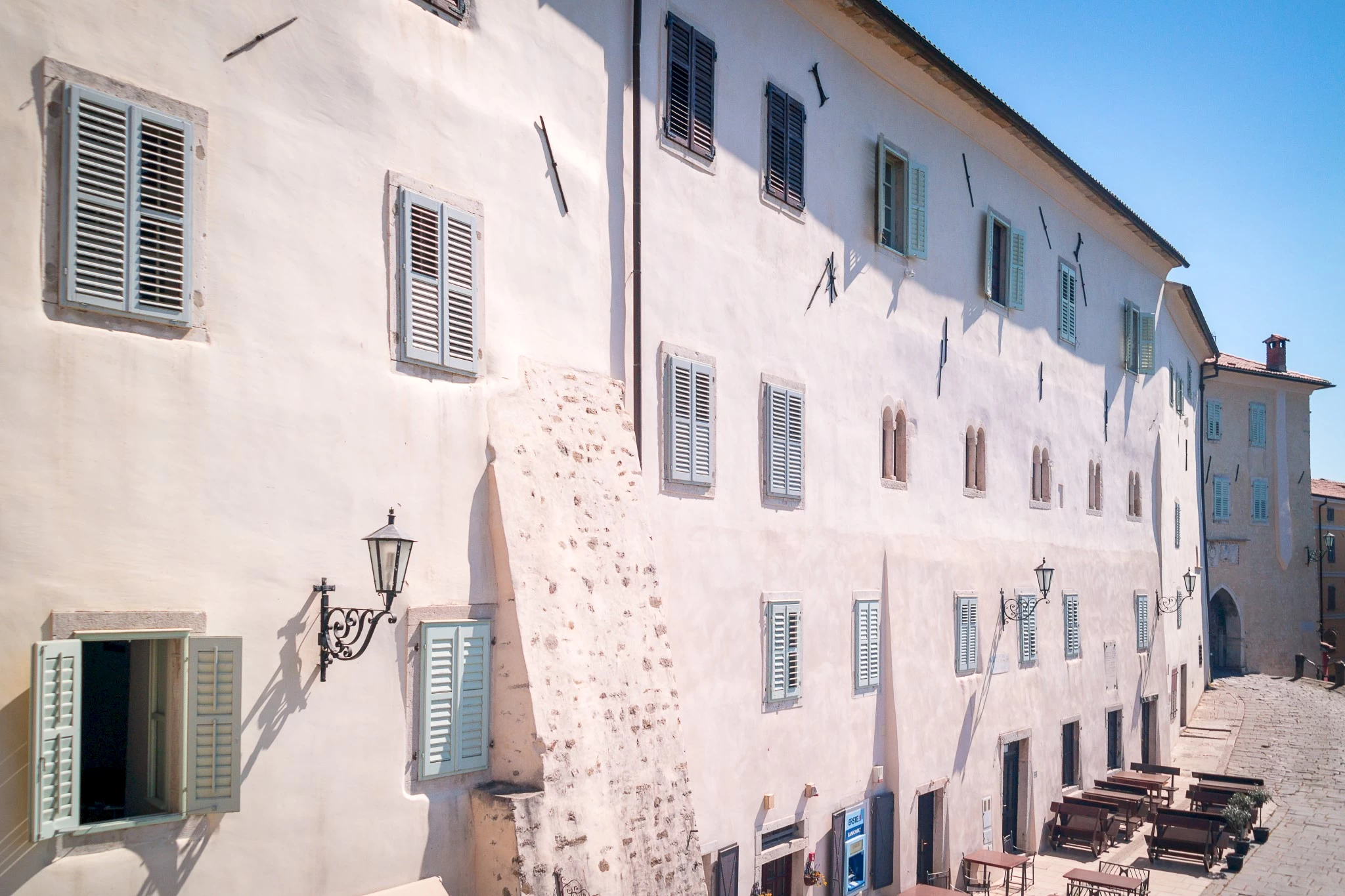
Historic Building
Municipal palace
75%
The Municipal Palace in Motovun is the best-preserved Romanesque public building in Istria and Croatia, dating back to 1248 and serving both as a town hall and a defensive structure.
UrbanRuralEducational

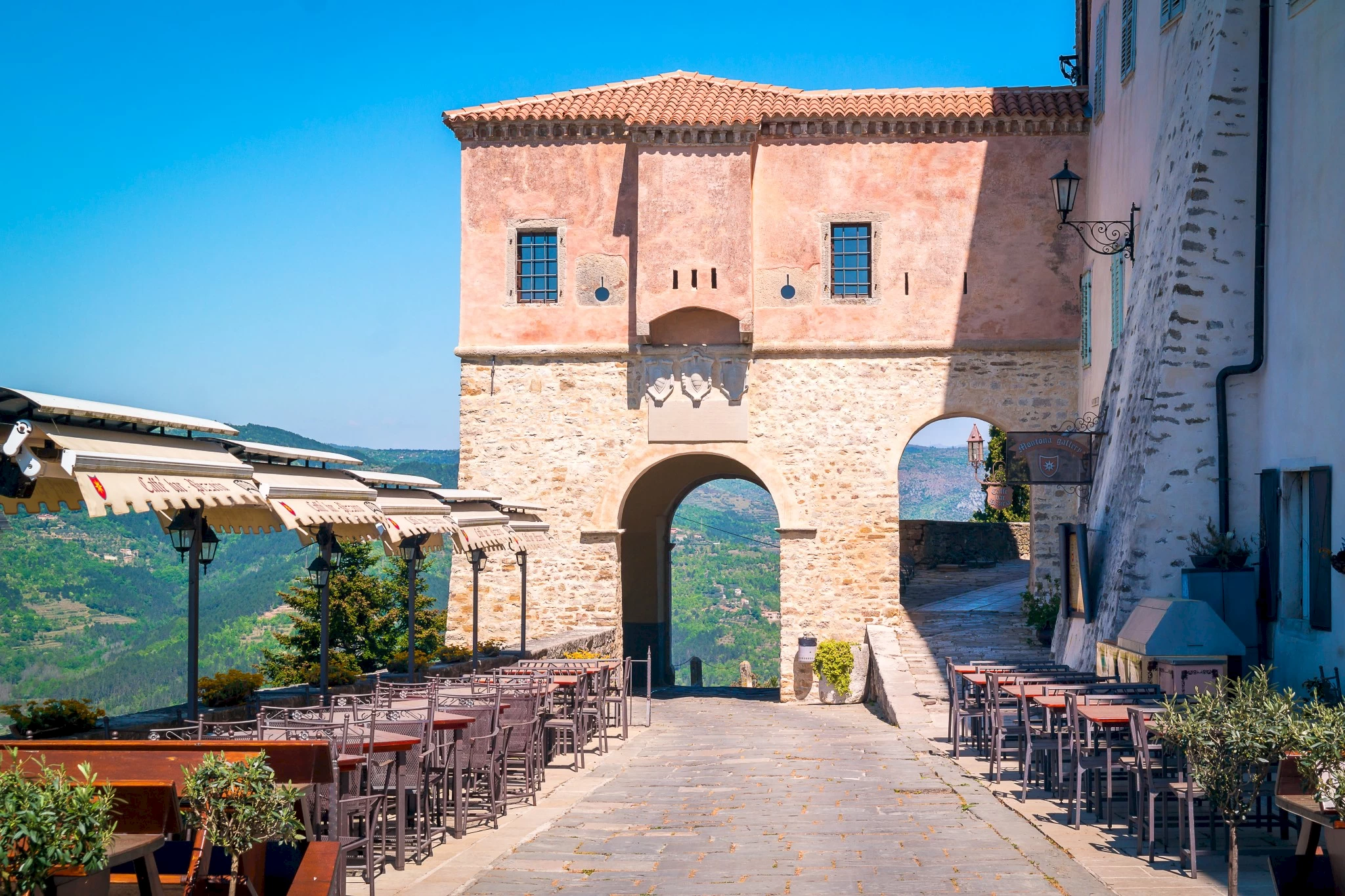
The Main City Gate in Motovun is a 14th-century structure featuring Gothic and Romanesque elements that served as the primary defensive entrance to the city.
The main city gate - They were built in the 14th century and are characterized by the fact that they contain elements of Gothic and Romanesque style of construction. Apart from having the function of defending the city, they were also the only access to the city center. They consisted of two wooden gates and loopholes hidden in various places that protected access to the door. Above the entrance to the city gate there are three coats of arms - the coat of arms of Motovun, the lion of St. Mark and coat of arms of the Memo family. The main door connects the lower and upper square.
The Municipal Palace in Motovun is the best-preserved Romanesque public building in Istria and Croatia, dating back to 1248 and serving both as a town hall and a defensive structure.
The Tower „New Gate” in Motovun is a 17th-century fortification featuring historical defensive architecture and a lapidary collection of Roman tombstones and coats of arms.
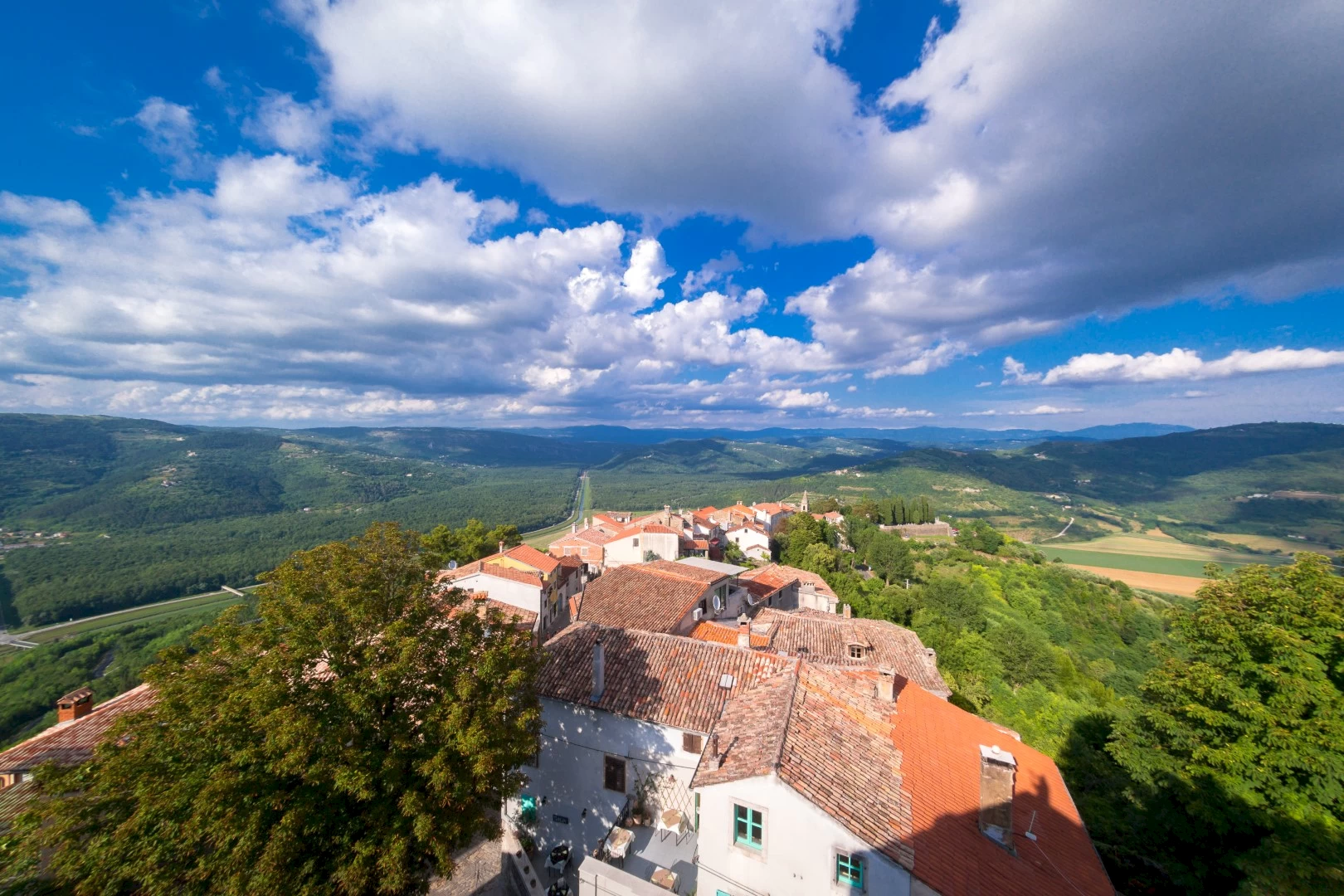
Gradiziol is a historic suburb of Motovun that developed during the 14th and 15th centuries, featuring the church of St. Margaret and 18th-century architecture.
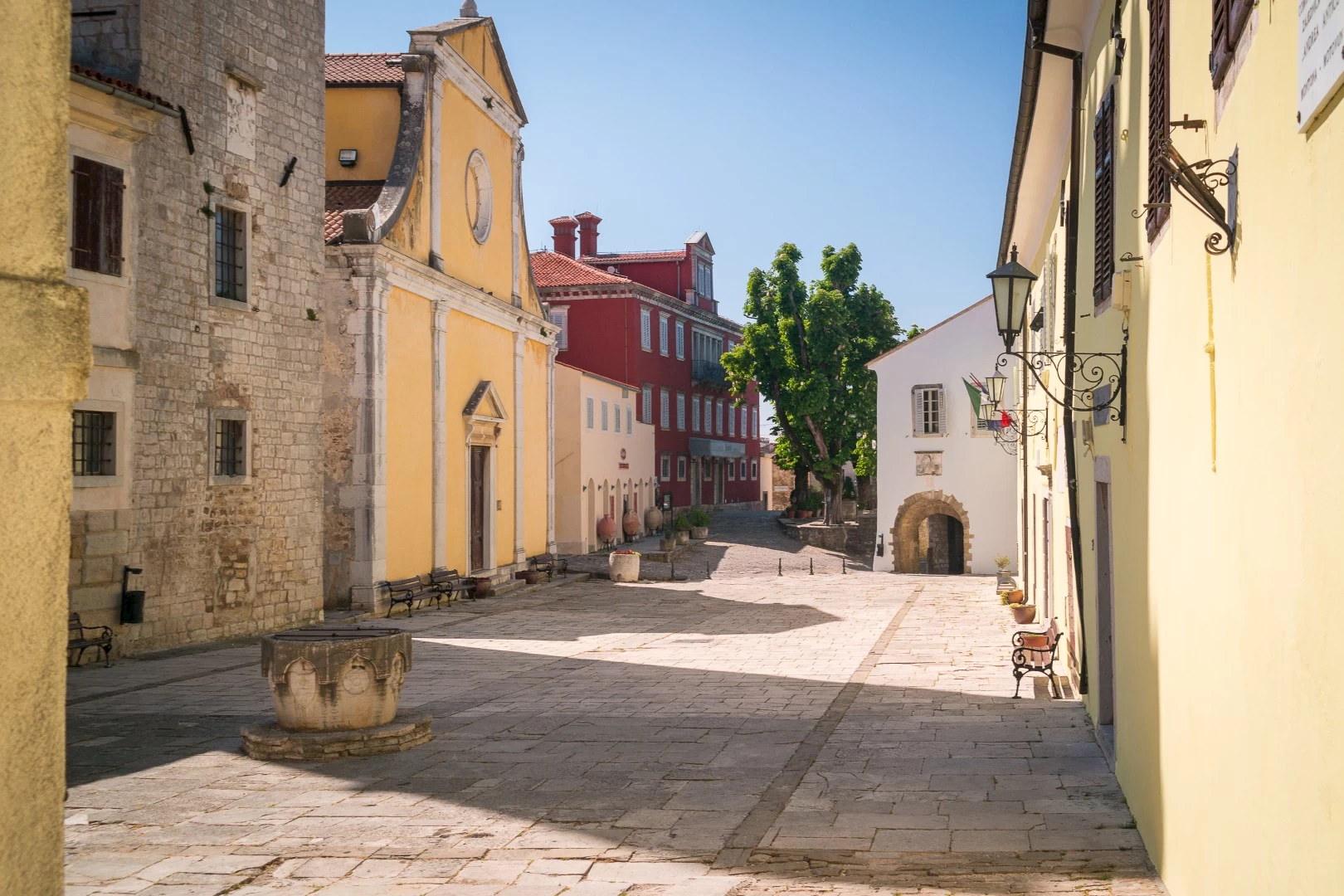
Andrea Antico Square is the main square of Motovun, named after the famous 15th-century music publisher and composer born in the town. It features historic well shafts, including one with the oldest Venetian lion in Motovun, and serves as the primary venue for public events.
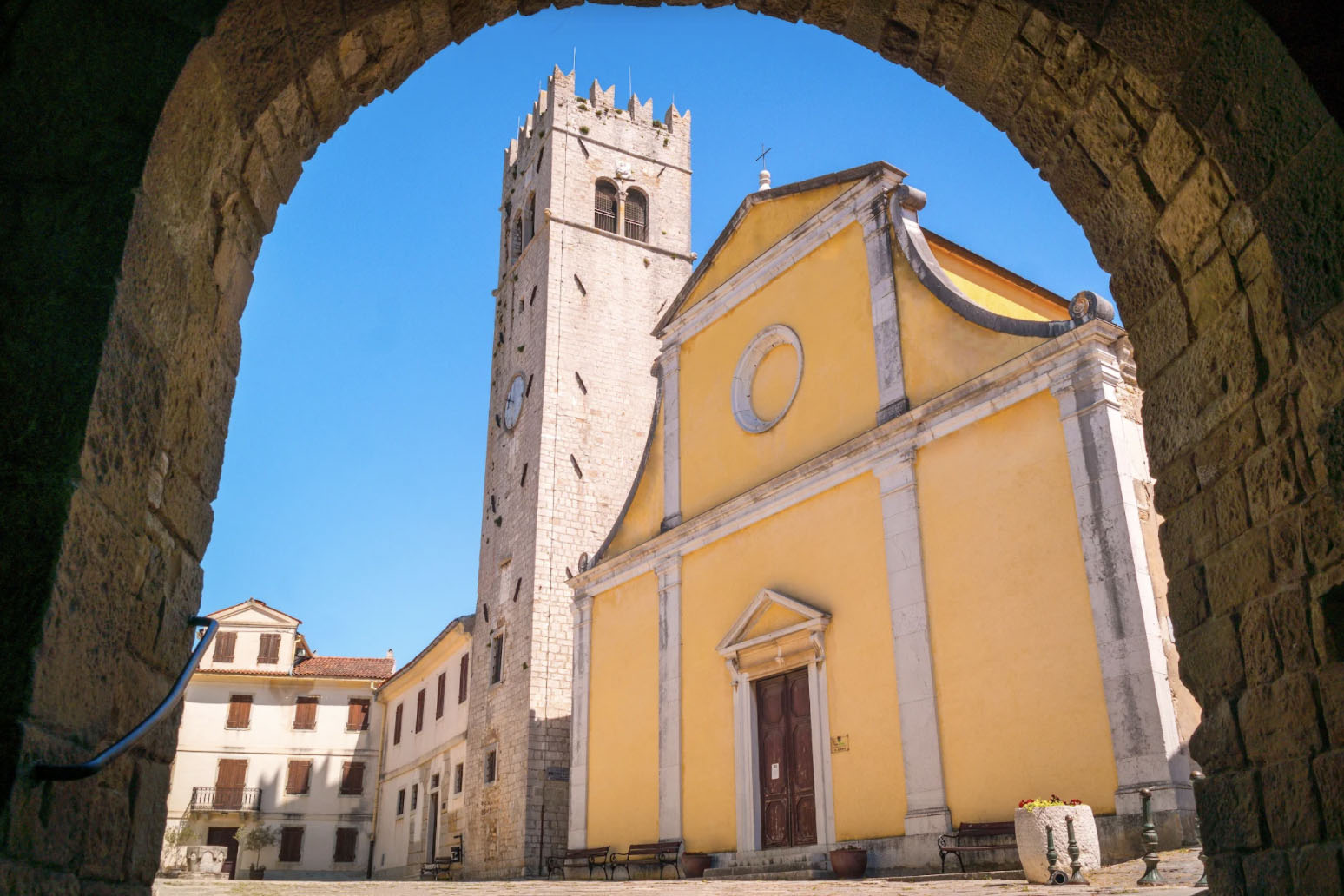
The Parish Church of St. Stephen the First Martyr in Motovun is a historic 16th-century church designed by Andrea Palladio, known for its rich sacral inventory including the Altariolo Colleoni and a relic of the Holy Thorn.
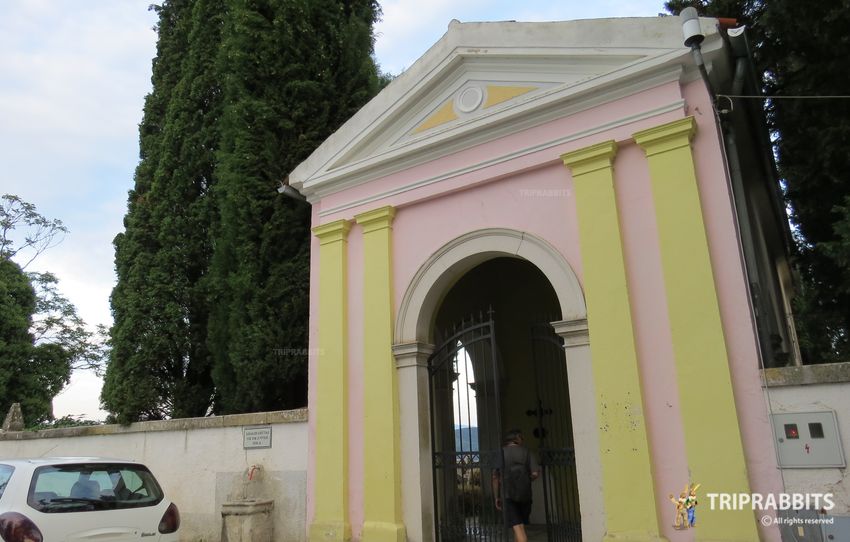
The Church of St. Margaret is a 19th-century church located at the historic upper cemetery in Motovun, which was formed by merging three older cemeteries in 1818.